
正义的伙伴
首钢7人上双112-95北控大比分3-1晋级,陈盈骏18+7,翟晓川15分_我的网站

一 |
北京时间4月21日中国男子篮球职业联赛 8进4,北京控股对阵北京北汽。半场北控47-53北京,最终北控95-112北京。
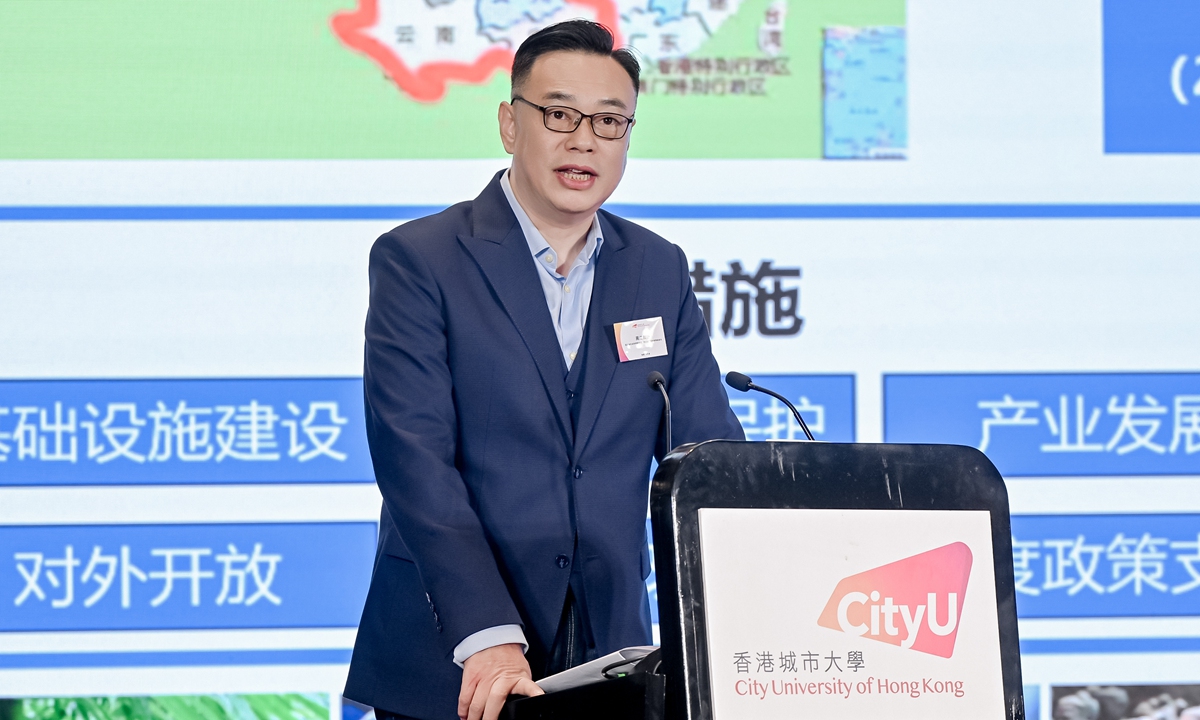
Zhou Jiang, a researcher at the Sichuan Academy of Social Sciences, has a favorite book: White Deer Tableland or Bai Lu Yuan by renowned writer Chen Zhongshi.
As vice president of the Regional Science Association of China (RSAC), Zhou told the Global Times that a lifetime of reading has profoundly shaped the way he sees and understands the world. It ultimately led him to a career in research and academia, where he teaches and pursues scholarly work.
Since earning his PhD in economics in 2000, he has devoted himself to the study of regional science and economics, a field that demands a constant crossing of disciplinary boundaries, drawing on the fields of geography, sociology, history, and ecology among others.
"Reading has kept alive my sense of curiosity and taught me to ask questions with patience and persistence: Where do disparities in regional development come from? How do policies affect different groups in society? And how can a region pursue both efficiency and equity so that development is not merely effective, but also imbued with a greater sense of humanity and warmth?" Zhou noted.
Founded in 1991, RSAC is a national academic society dedicated to advancing domestic and international academic exchange and cooperation, providing consulting services on spatial planning, urbanization, and regional development, and offering intellectual support for China's modernization drive.
The 57-year-old researcher noted that reading has empowered him in two distinct ways.
"The first is discernment. When confronted with a complex issue, I try not to settle for a simple conclusion. Instead, I make an effort to understand its broader context, how it has unfolded, and the perspectives of the different people involved," he said.
"The second is a sense of inner steadiness. Setbacks are an inevitable part of both life and work. Good books remind us that hardship is never ours alone to bear; countless people before us have faced circumstances more difficult than our own, made difficult choices, and found the strength to carry on. Reading cannot solve every problem for us, but it can help us remain calm when challenges arise, giving us the clarity and resilience that allow us not to panic or give up too easily," he said.
Historical depth
Each time Zhou returns to the White Deer Tableland, he finds something different in its pages.
"When I first read it as a young person, I was drawn primarily to the characters and the twists and turns of their lives. Later, as I began researching regional economics, I found myself paying closer attention to the changes in the land, the countryside, families and social order presented in the story. Now, approaching 60, I have come to appreciate more deeply the choices the characters make, the constraints they face, and the quiet perseverance they show amid the sweeping currents of their times," he said.
White Deer Tableland uses Bai Lu village in Northwest China's Shaanxi Province as a microcosm, tracing the feuds and intertwined fortunes of three generations of the Bai (literally meaning white) and Lu families. Through their stories, it captures more than half a century of sweeping historical change, from the final years of the Qing Dynasty (1644-1911) to the 1970s and 1980s. The novel won the Mao Dun Literature Prize, one of China's top literature awards, in 1997.
Zhou prefers literary works with historical depth and a keen eye for social change.
Regional economics may appear to be concerned with the spatial distribution of industries, population and resources, but at its heart, it is about how people live on a particular piece of land, and why some places flourish while others decline, he noted.
In this sense, literature and history are more than pastimes beyond professional research. They often help him understand the historical context, cultural traditions and social mentality that lie behind economic data, he said.
When reading novels, Zhou said that he often pays close attention to the relationship between people and the places they inhabit: How the land shapes the local character, how transportation transforms a region, and how shifts in industry reshape families and villages. Such details may not offer a direct conclusion, but they broaden a researcher's perspective. They also serve as a reminder that research should look beyond growth rates and statistical indicators to consider the sense of fulfillment experienced by ordinary people and the dignity of human beings.
Understanding ourselves
Once, while tidying his study, he came across a book filled with notes he had scribbled in his early years. Among them was a question that particularly caught his attention: "In the face of sweeping changes in the times and profound social transformation, what can a person truly determine for himself?"
Looking at those words he had written in his youth was like coming face to face with the person he had been decades ago.
Reading is not simply the act of understanding a book; it is also a record of a person's own growth, he said. The same book can reveal something entirely different when read at different stages of life.
When we are young, we turn to books in search of answers; but when we become seasoned, we read more to understand life, to understand others, and ultimately, to better understand ourselves, Zhou said.
In this era of fragmented information, AI can help people access information quickly, organize materials, and gain a basic understanding of unfamiliar fields. Yet deep reading, Zhou said, allows people to see how a conclusion is reached — what evidence supports it, where its boundaries lie, and what alternative interpretations it may invite.
What truly shapes a person, after all, is not how much information they have browsed, but the words that have made them pause and reflect - and the words that have remained with them for many years, he added.
。北京控股格兰特-里勒27分4板7助,朱松玮17分2板;北京北汽尤金-杰曼25分3板6助,陈盈骏18分3板7助。
第一节,范子铭肘击特莱斯,后者痛苦倒地,首钢4-4北控
第一节,陈盈骏妙传顺下所罗门双臂暴扣,首钢8-4北控
第一节,陈盈骏、翟晓川接连三分领先两位数,首钢18-8北控
第一节,翟晓川假手递手冲入内线拉杆终结,首钢20-9北控
第一节,陈盈骏超高难度压哨后仰中距离,首钢25-19北控
第一节,杰曼、里勒对飙三分,首钢23-15北控
第一节,廖三宁冲框面对曾凡博追击单臂劈扣砸飞,首钢27-21北控
第二节,朱松玮抢断一条龙超远起飞上篮终结,首钢36-30北控
第二节,真有默契,范子铭再度连线所罗门空接暴扣,首钢42-34北控
第二节,里勒顶翻防守人随后空中对抗将球打进,首钢50-47北控
第二节,最后一攻杰曼拉开单打撤步压哨三分,首钢53-47北控
第三节,所罗门不看人妙传范子铭轻松吃饼,首钢59-51北控
第三节,杰曼面对多人围堵冲框抛投压哨命中,首钢61-56北控
第三节,杰曼单打里勒撤步后仰三分领先13分,首钢69-56北控
第三节,曾凡博反击遭孟子凯拉拽倒地,后者违体犯规累积之前技犯遭驱逐
第三节,最后一攻杰曼突分纳托尔压哨三分命中,首钢81-66北控
第四节,领先20分了,纳托尔高打板上篮命中,首钢86-66北控
第四节,翟晓川连续两记三分点燃全场,首钢94-75北控
第四节,曾凡博突破摆臂肘到朱松玮面部
第四节,里勒压哨空位三分追至10分分差,首钢96-86北控
第四节,曾凡博左翼扬手三分稳住局面,首钢102-88北控
第四节,比赛收尾段陈国豪、曾凡博互献暴扣
赛况
第一节北控格兰特-里勒拿下8分,北京陈盈骏拿下9分,首节战罢北控21-29落后北京
第二节北控格兰特-里勒拿下10分,北京陈盈骏拿下6分,半场结束北控47-53落后北京
第三节北控贾里德-萨林杰拿下7分,北京范子铭拿下6分,第三节结束北控66-81落后北京
第四节北控陈国豪拿下11分,北京翟晓川拿下8分,最终北控95-112不敌北京
球员全场数据
北京控股格兰特-里勒27分4板7助1断,朱松玮17分2板3断,贾里德-萨林杰15分7板;
北京北汽尤金-杰曼25分3板6助,陈盈骏18分3板7助3断,翟晓川15分5板1助1断。
首发阵容
北京控股:格兰特-里勒,朱松玮,陈国豪,沈梓捷,特拉维斯;
北京北汽:尤金-杰曼,陈盈骏,理查德-所罗门,雷蒙,范子铭。
二 |
Current article:http://7pqy.wengsengzhanhuangu.cyou/kpodiz/34x.html
Published on:10:39:53
留学6年底薪两千_Random reading
- 08-25Taiwan regional travelers with so-called ‘passports’ denied entry to Uganda; mainland expert says separatist pursuits keep narrowing island’s international space
- 08-23Pradeep Ranganathan Set To Direct His Next As Lead
- 08-25建昌县实现“一事跑多窗”向“一窗办多事”转变
- 08-22漳州一农业项目荣获全国农牧渔业丰收奖
- 08-22兴城市开展“3·15”药品、医疗器械安全科普宣传讲座
- 08-23夸梅:20年湖人季后赛浓眉一度6项数据领跑全队
- 08-25India logs 2,678 new Covid cases
- 08-25恶劣天气送关键单沟通顾客后被美团外卖无故扣款
- 08-21战火烧到“购物车”,乌改变打法,直击俄经济大后方,张弘:军民界限彻底消失
- 08-26【研报观点】8月26日氧化铝最新观点汇总

我的团长我的团_Active users
- 国际足联主席首次公开道歉
- 收获满满!B费包揽英超官方、FWA、PFA赛季最佳球员三项大奖
- 恒立液压:上半年归母净利润14.36亿元,同比增长0.50%
- 全力推进项目建设落地成势、提质增效
- 中国人民银行:前7个月人民币贷款增加10.38万亿元
- 男子骚扰女孩、殴打女孩家长 河南新郑市警方:已被采取刑事强制措施
- 前上海海港主帅是如何借铁腕手段与过人智慧,帮助狼队保级的?
- 「1500円なのに軽すぎる」 ワークマンの“高コスパシューズ”に驚きの声 「とにかく歩きやすい!」「買って損なし」
- 두 딸 태우고 178㎞ 만취운전…사망사고 낸 엄마, 2심서 범행 인정
- 无名女尸细节披露:穿中国老纺织厂背心,华人社区成破案关键
- 云南省科学技术协会原党组书记、常务副主席张泽军被双开_违规_严重
- 龙兴黄金海岸音乐季 “魅力龙兴 唱响龙湾”主题音乐晚会精彩上演
- “韩版2077”全新预告公布!虚幻5打造高端单机
- 山水秋韵 多彩抚顺 《秋游辽宁宝典》宝藏目的地之抚顺篇~
- 2019猫年春节,0:00超级红信封,每天3次,最高888元(附策略)
- 米内罗社媒:经历了8天3赛的密集赛程,但还是100%享受每场比赛
- 湖人近7年首次无缘揭幕战!赛季首战主场vs勇士 年终大战迎詹姆斯回归
- China's longest offshore steel trestle bridge completed in Dalian
林中小屋_Hottest this week
- 正义的伙伴 copyright
- Some of the content comes from the Internet. If you have any offence, please raise it.